Organic vs Paid Social Media: Which Is Better?
Social media has become one of the most powerful marketing channels for businesses of all sizes. But one common question marketers and business owners often ask is: Should we focus on organic social media or invest in paid social media? Both strategies have their own strengths, limitations, and ideal use cases. Understanding the difference between the two can help you choose the right approach—or the right mix—for your brand.
What Is Organic Social Media?
Organic social media refers to the free content you post on your social media profiles—such as posts, stories, reels, comments, and shares—without spending money on advertising. It focuses on building a genuine connection with your audience over time.
Benefits of Organic Social Media
-
Builds brand trust and authenticity: Consistent, valuable content helps establish credibility and long-term relationships.
-
Cost-effective: No direct advertising cost, making it ideal for startups and small businesses.
-
Encourages engagement: Organic content often sparks conversations, comments, and community building.
-
Supports brand voice: It allows brands to showcase personality, values, and culture.
Limitations of Organic Social Media
-
Limited reach: Due to algorithm changes, organic reach has declined on most platforms.
-
Slow results: Growth takes time and requires consistent effort.
-
Hard to scale quickly: Reaching a large or new audience can be challenging without promotion.
Organic social media works best for nurturing existing followers, building loyalty, and maintaining a strong brand presence.
What Is Paid Social Media?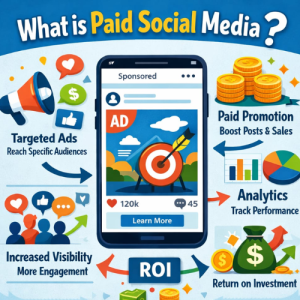
Paid social media involves promoting content through paid advertisements on platforms like Facebook, Instagram, LinkedIn, and X (Twitter). These ads can be targeted to specific audiences based on demographics, interests, behavior, and location.
Benefits of Paid Social Media
-
Instant visibility: Ads can quickly reach a large and relevant audience.
-
Precise targeting: You can reach users most likely to convert.
-
Scalable results: Budgets can be increased to grow reach, leads, or sales.
-
Measurable performance: Clear data on clicks, impressions, conversions, and ROI.
Limitations of Paid Social Media
-
Requires budget: Continuous spending is needed to maintain visibility.
-
Short-term impact: Once ads stop, traffic and engagement may drop.
-
Ad fatigue: Repetitive ads can reduce performance over time if not refreshed.
Paid social media is ideal for product launches, lead generation, promotions, and driving immediate results.
Organic vs Paid Social Media: A Quick Comparison
Aspect |
Organic Social Media |
Paid Social Media |
|---|---|---|
Cost |
Free (time-based) |
Paid (budget-based) |
Speed of Results |
Slow |
Fast |
Reach |
Limited |
High & targeted |
Trust Building |
High |
Moderate |
Scalability |
Low |
High |
Best For |
Brand building & engagement |
Leads, sales & awareness |
Which One Is Better?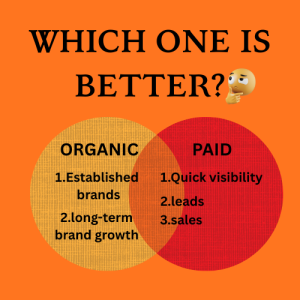
There is no single “better” option—it depends on your goals.
-
If your goal is long-term brand growth, community building, and trust, organic social media is essential.
-
If your goal is quick visibility, leads, or sales, paid social media delivers faster results.
-
For new businesses, paid ads can help gain initial traction while organic content builds credibility.
-
For established brands, organic content keeps audiences engaged, while paid campaigns amplify reach.